The reader
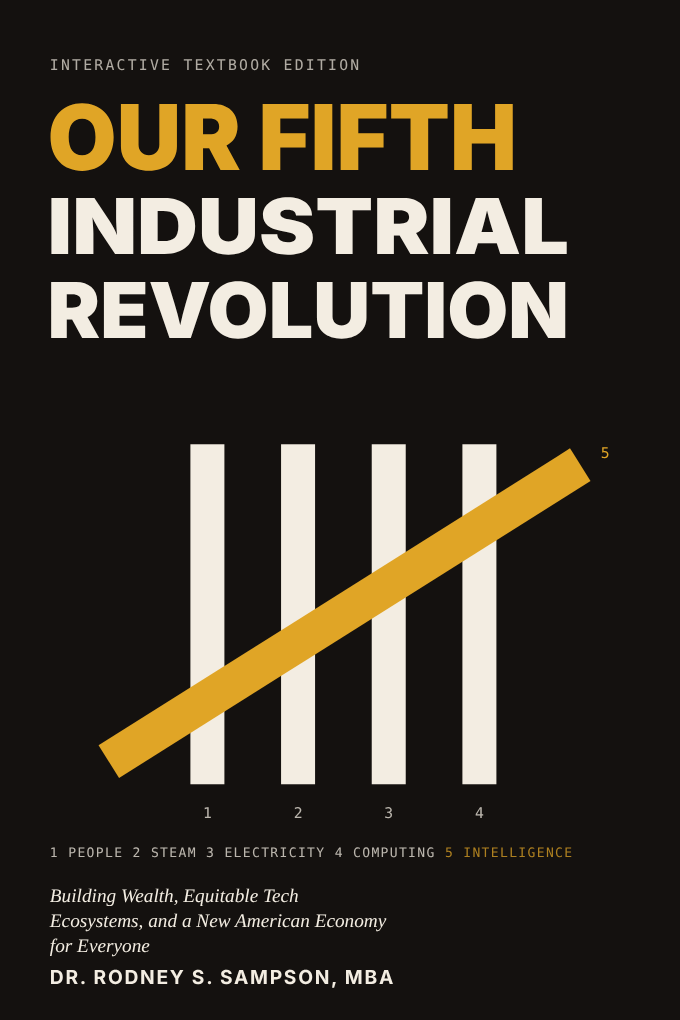
Our Fifth Industrial Revolution
Building Wealth, Equitable Tech Ecosystems, and a New American Economy for Everyone
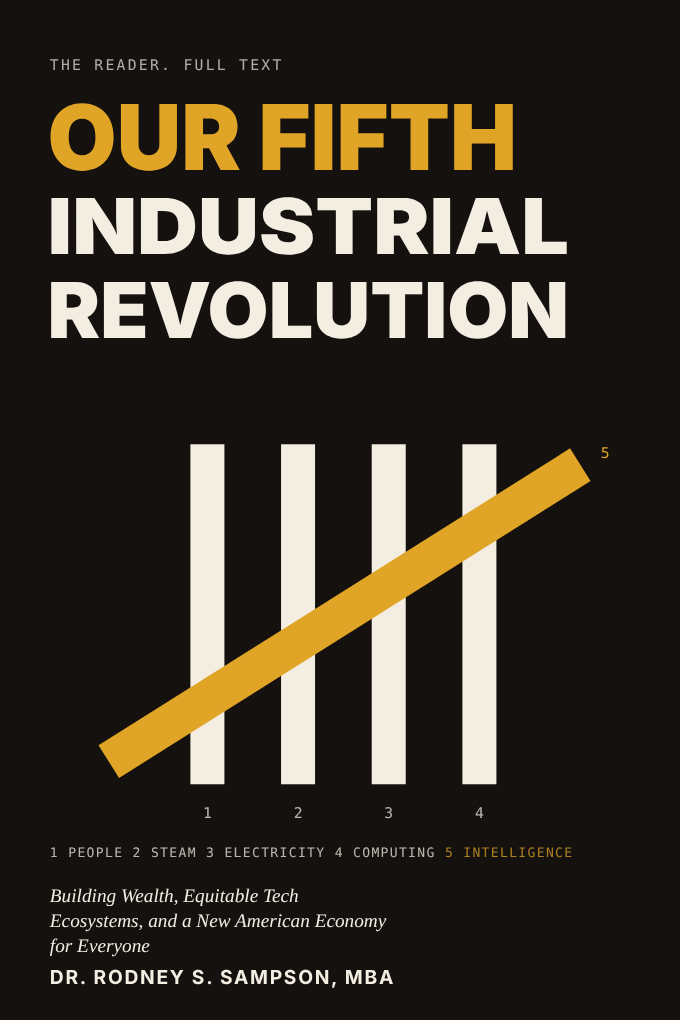
This is the reader: the full text the courseware is built on. It counts five industrial revolutions, asks who owned each one, and sets out how founders, investors, institutions and policymakers can own the fifth. It can be read on its own, with no course attached.
- 5
- parts
- 27
- chapters
- 155,000
- words
- 16
- courses built on it
What is in it
- Part I. The World We InheritedWho invented, financed and owned the first four industrial revolutions, and what that left behind.
- Part II. The Ecosystem ImperativePlaces, talent, new ventures and jobs: how a region builds the conditions for ownership.
- Part III. The Capital QuestionVenture capital, the JOBS Act, angel investing, institutions as investors, and policy as infrastructure.
- Part IV. Archetypes of the Fifth Industrial RevolutionFounders, investors, builders and allies in policy and capital, and what each one teaches.
- Part V. The Blueprint for ManifestationWhat each stakeholder can do next, and a model written down so that it can be repeated.
The reader also has a prologue, an introduction, an epilogue, a note on sources and a bibliography.
Two editions
Complete edition
27 chapters
The full text in five parts, about 155,000 words, with a prologue, an epilogue and a note on sources.
Universal edition
15 chapters
The argument in four parts, about 20,000 words, written for any classroom, any reading group and any reader.
Tell us which edition you want when you ask about the reader.
How it is offered
- Reading edition, online. The full text in a reader built for long reading, with an index and a note on sources.
- With the courseware. Institutions that license a program receive the reader for faculty and students.
- On its own. Individuals, book groups and organizations can ask for copies. Tell us how many readers you have.
- Trade edition. An edition for general readers is planned for 2027.
By Dr. Rodney S. Sampson, MBA. The reader is education. It is not legal, tax, accounting or investment advice.
From the reader to the classroom
Each part of the reader became courses. The gateway course follows it module by module. The other fifteen go deeper into one subject each.