
FIR 230
Law of Startups, Securities and Intellectual Property
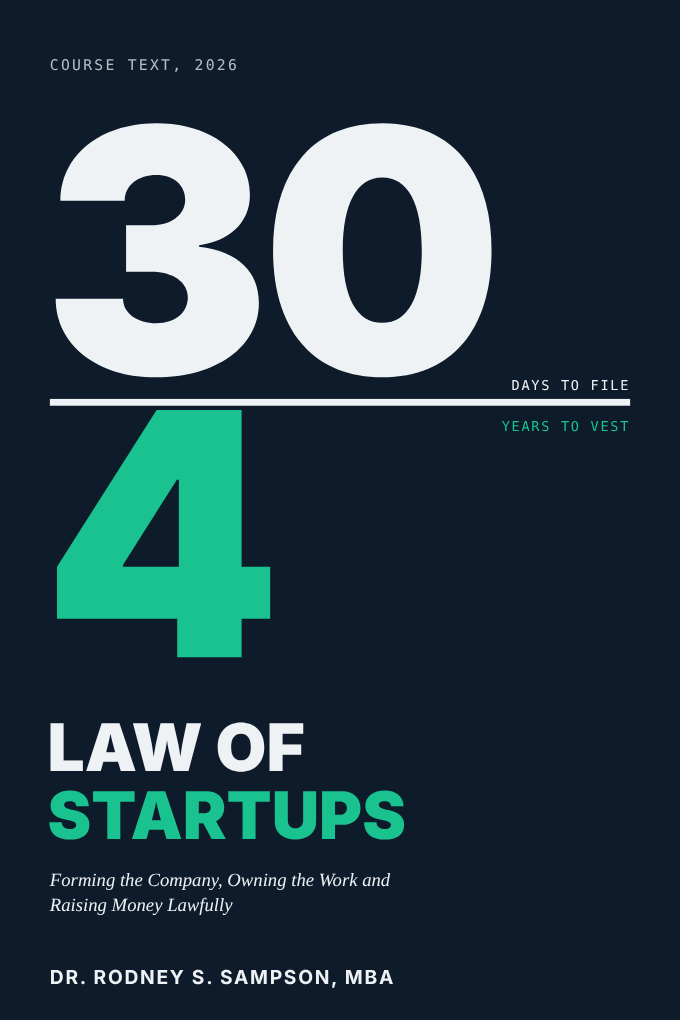
Forming the Company, Owning the Work and Raising Money Lawfully
Most of the law in a young company's life is settled in its first year, often in an afternoon. This course teaches that law: how to form the company, how to make sure it owns what its people create, and how to take money without breaking the rules. It ends with a legal audit of a real or invented company.
- 12
- lessons
- 12
- interactive labs
- 48
- knowledge-check questions
Who it is for
It is written for founders, early employees and new investors, and for students who will become any of them. It assumes no legal training. It will not make anyone a lawyer. It will make a reader a better client and a harder person to surprise.
What is in it
Part I. Forming the Company
- Why Founders Study LawWhich legal decisions of a company's first year are cheap to make well and expensive to repair?
- Choosing an EntityWhich legal form fits the business, and why do venture investors expect a Delaware C corporation?
- Founders' Stock and VestingHow should founders divide and earn their shares, and which deadline cannot be missed?
- Agreements, Authority and DutiesWho decides what in a company, and what do the people in charge owe it?
Part II. What the Company Owns
- Four Kinds of Intellectual PropertyWhat can a company own of what it creates, and by which kind of right?
- PatentsWhat can be patented, what does it cost, and when is it worth it?
- Who Owns the WorkDoes the company actually own what its founders, employees, contractors and friends created?
- Licensing and Technology TransferHow does a company use or grant rights without transferring ownership, and what should it watch for?
Part III. Raising Money Lawfully
- What Counts as a SecurityWhen a company takes money from anyone, which rules apply and which exemption is it using?
- SAFEs, Notes and Priced RoundsWhat is a founder actually selling under each instrument, and how much?
- Documents, Representations and DiligenceWhat does a company promise is true when it takes money, and can it prove it?
- Disputes, Failure and the Legal AuditWhat goes wrong, how is it handled, and what does a complete legal audit contain?
A student who finishes can
- Name the four bodies of law a startup lives under.
- Explain limited liability and its limits.
- Explain how founders' stock is issued and priced.
- Distinguish shareholders, directors and officers.
For a curriculum committee
- Suggested listing
- FIR 230, 3 credits
- Assumes
- FIR 201 (the gateway course). No legal training is assumed.
- Pacing
- Twelve lessons across fifteen weeks. Week 7 is a midterm: the formation and ownership sections of the audit. Weeks 14 and 15 are audit presentations and the final.
Suggested only. The adopting institution sets numbers, credit and prerequisites.
Formats
- Interactive online text, student edition
- Instructor edition with session plans, slides, test bank, rubrics and pacing guides
- Learning-system package (Common Cartridge)
- Print-ready PDF
- Slide deck for every lesson
By Dr. Rodney S. Sampson, MBA. This course is education. It is not legal, tax, accounting or investment advice.