
FIR 201
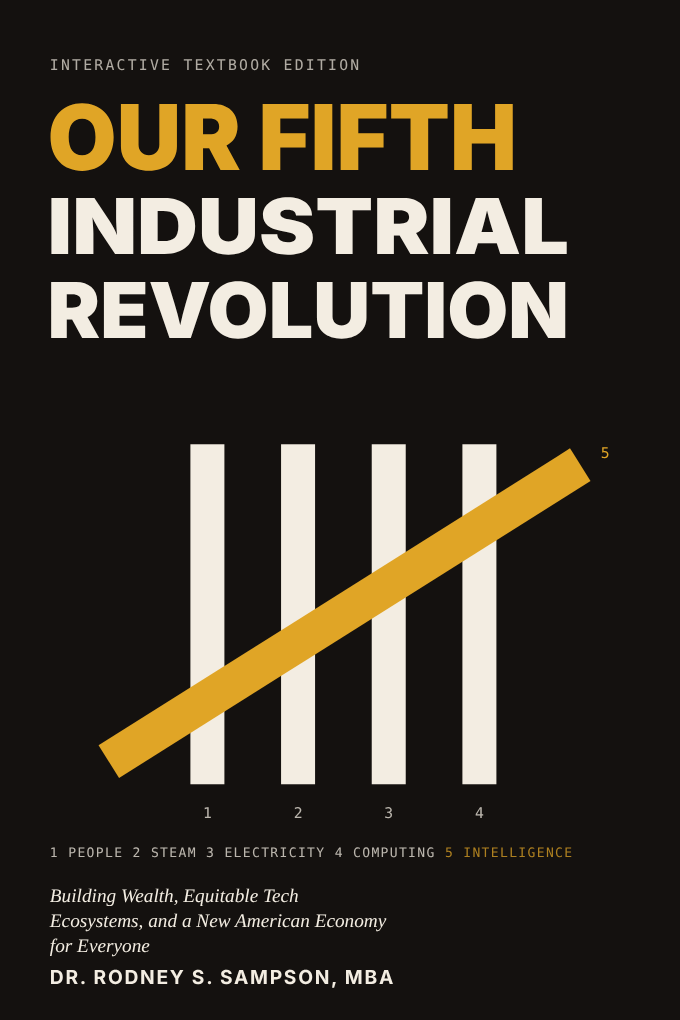
Our Fifth Industrial Revolution
Building Wealth, Equitable Tech Ecosystems, and a New American Economy for Everyone
Students who finish can innovate in the fourth industrial revolution, build frontier technology, start a high-growth company, raise angel and venture capital, invest as an angel or limited partner, and turn all of it into multi-generational wealth without inheriting any.
- 15
- modules
- 15
- interactive labs
- 48
- knowledge-check questions
What is in it
Part I. Who Owned the Last Four Revolutions
- Counting the RevolutionsEvery industrial revolution created enormous wealth. Why did so little of it reach people who started without capital?
- Inventing Is Not OwningWhy do so many inventors watch someone else collect the value of what they built?
- Income Is Not WealthWhy can two people with the same salary end up a generation apart in wealth?
- How Venture Capital WorksWhy do venture investors behave the way they do, and what does that mean for anyone who wants their money?
Part II. How Innovation Ecosystems Are Built
- The Economic Development PyramidWhy do so many cities launch accelerators and still produce no high-growth founders of their own?
- Places: From Co-working Space to Owned DistrictWhen an innovation district succeeds, who owns the appreciation?
- Talent and Frontier TechnologyWhat do you need to know to build at the frontier, and how does a region produce people who know it?
- High-Growth Company BuildingWhat has to be true about a company before outside capital can help it?
Part III. The Capital Question
- Term Sheets and Cap TablesAfter three rounds of funding, how much of your company do you still own, and who gets paid first?
- The JOBS Act ToolkitHow can a company legally raise money from people who are not wealthy, and when should it?
- Angel InvestingHow do you invest in startups without betting your future on one of them?
- Becoming a Limited Partner and Building a FundWhat would it take for your institution to become an investor and not only a donor?
Part IV. Policy, Practitioners and the Blueprint
- Policy as InfrastructureA data center is coming to your county. What should the community receive, and who negotiates it?
- Practitioners: Founders, Investors, Builders, AlliesWhose path most resembles the one you intend to take, and what did it cost them?
- The Blueprint: Multi-Generational Wealth from a Standing StartWhat will you own in ten years, and what will your grandchildren own because of it?
A student who finishes can
- Describe the four industrial revolutions and the general-purpose technology behind each.
- Separate three roles that are often confused: inventor, founder and owner.
- Define wealth, income and net worth, and read a household balance sheet.
- Diagram a venture fund: limited partners, general partner, management fee and carried interest.
Formats
- Interactive online text, student edition
- Instructor edition with session plans, slides, test bank, rubrics and pacing guides
- Learning-system package (Common Cartridge)
- Print-ready PDF
- Slide deck for every lesson
By Dr. Rodney S. Sampson, MBA. This course is education. It is not legal, tax, accounting or investment advice.