
FIR 320 · 630
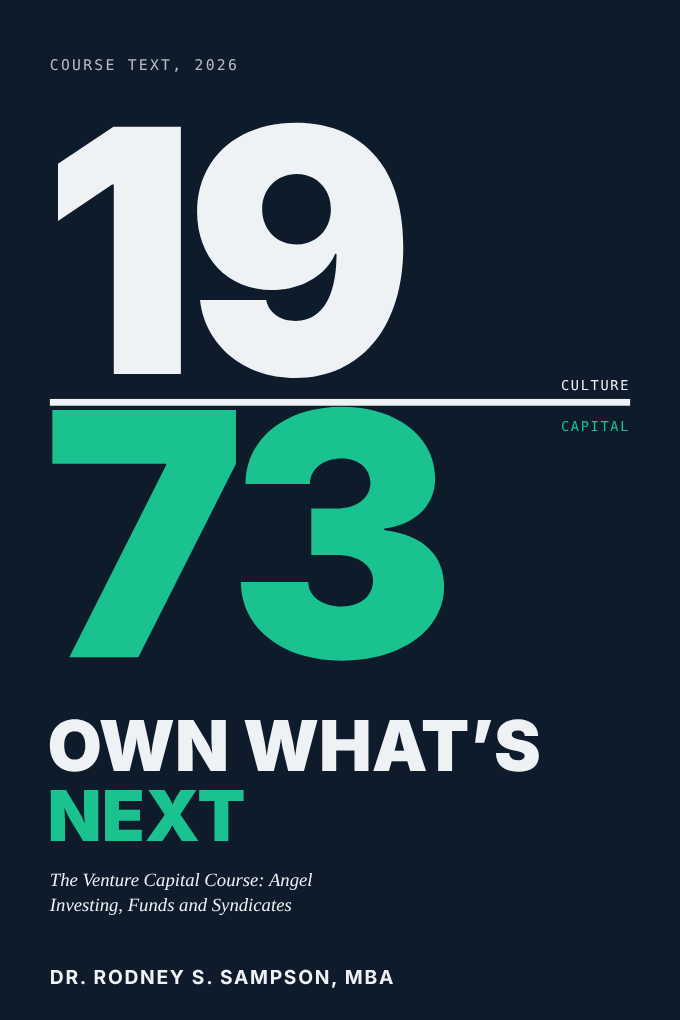
Own What's Next
The Venture Capital Course: Angel Investing, Funds and Syndicates
This course was first taught in 2021 with UNC Kenan-Flagler, Duke and the Stanford Technology Ventures Program. This edition is complete in itself. It introduces each of the investors, founders, regulators and scholars whose experience it draws on, retells what they have learned, and states every rule and number as it stands today.
- 12
- lessons
- 12
- interactive labs
- 36
- knowledge-check questions
Who it is for
It is written for two rooms at once: a credit-bearing university course, and a professional certificate for working adults, alumni bodies and civic institutions.
What is in it
Part I. Understand the System
- Two Revolutions, One YearHip hop and the organized venture capital industry both date to 1973. Why did one become a culture and the other an ownership machine?
- Where Jobs and Wealth Come FromIf new companies create the jobs and the fortunes, who owns the new companies?
- How the Machine Was BuiltWhy are fewer companies going public, and what does that have to do with who gets to invest?
- Navigating the Innovation EcosystemWhere do investable companies come from, and what has to exist in a city before they appear?
Part II. Evaluate the Deal
- Risk, Legalities and the SECWhat makes a private investment legal, and what protects you when it is?
- Early-Stage Investing: AngelsHow do you write your first checks without betting everything on one company?
- Due Diligence and ValuationWhat do you need to know before you wire money, and what is a company with no profits worth?
- Venture Fund InvestingWhen should you stop picking companies and start picking managers?
Part III. Move Capital with Purpose
- Questionnaires, SAFEs and Term SheetsWhat are you signing, and what does it turn into?
- Accounting, Taxes and ExitsHow much of a win do you keep?
- Syndicates, Funds and Institutional VehiclesWhat could your institution own if its members invested together?
- Creating Multigenerational WealthWhat will the people who come after you own because of what you do now?
A student who finishes can
- Place the founding events of modern venture capital on a timeline.
- Cite the evidence that young, venture-backed firms drive job and wealth creation.
- Describe how a venture fund is structured and paid.
- Describe the levels of the Economic Development Pyramid.
For a curriculum committee
- Suggested listing
- FIR 320 (undergraduate) and FIR 630 (graduate), 3 credits
- Assumes
- None for FIR 320. FIR 201 recommended.
- Pacing
- Twelve lessons across fifteen weeks. Week 7 is a midterm diligence memo presented to a practitioner panel. Weeks 14 and 15 are group vehicle plans and the final.
Suggested only. The adopting institution sets numbers, credit and prerequisites.
Formats
- Interactive online text, student edition
- Instructor edition with session plans, slides, test bank, rubrics and pacing guides
- Learning-system package (Common Cartridge)
- Print-ready PDF
- Slide deck for every lesson
By Dr. Rodney S. Sampson, MBA. This course is education. It is not legal, tax, accounting or investment advice.